
Industry
Restaurant bookkeeping, from someone who ran the bar
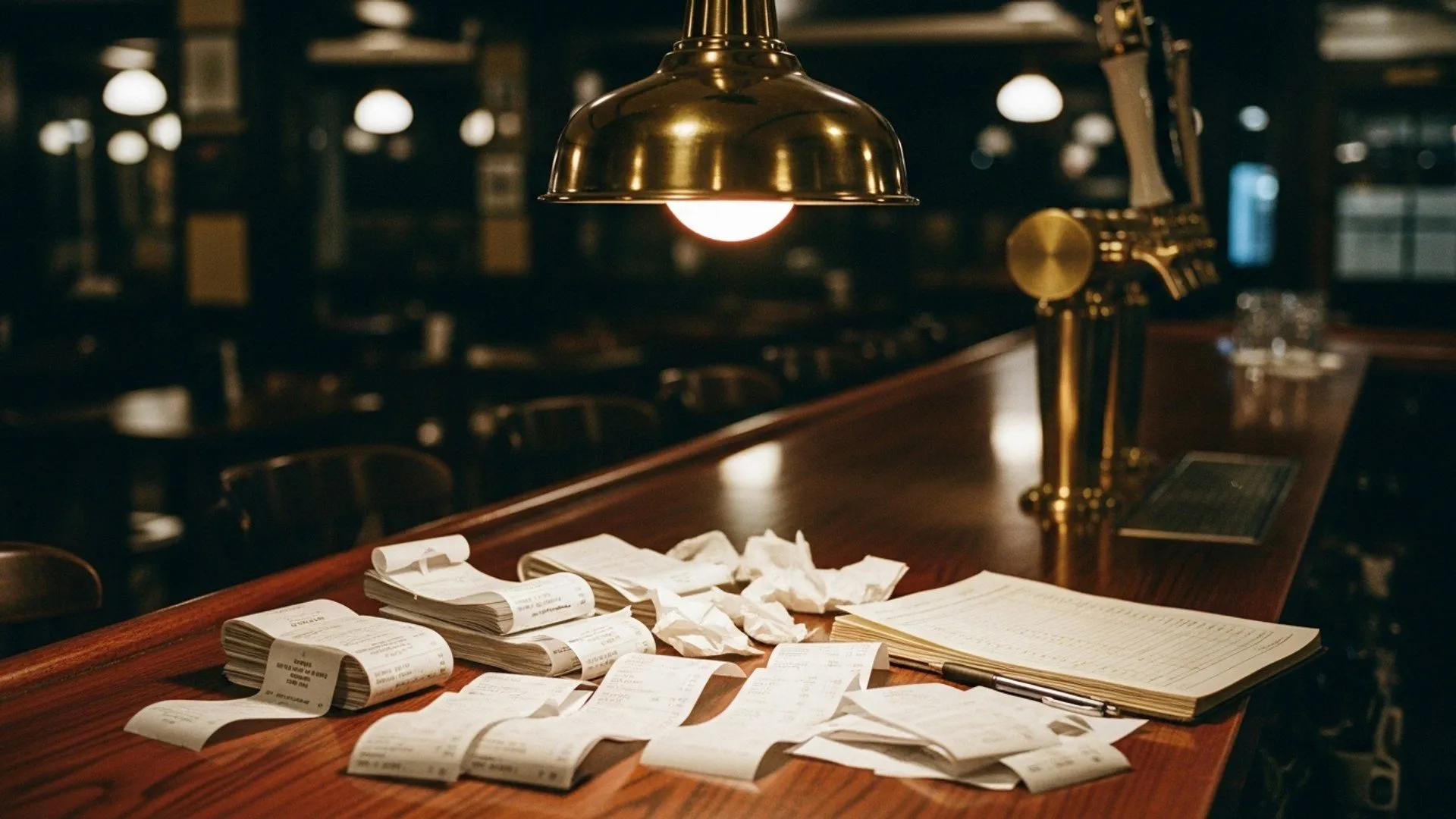
I owned a pub for 11 years, and a second one for 7 of those years. I did the books for both, every week, through good Decembers and terrifying Januaries. So when I write about restaurant bookkeeping, it’s not research; it’s scar tissue. Restaurants are the hardest small-business books I know, and the most worth doing well, because the margins forgive nothing.
Here’s what matters, from someone who has counted the drawer at 2am.
Why restaurant books are their own animal
A consultant has 40 transactions a month. A busy restaurant has 400 a day. Between the POS, the card processors, the vendors, payroll with tips, and the cash drawer, restaurant money moves fast and through more doors than almost any other small business. The bookkeeping has to match that speed: key numbers weekly, books closed monthly, and no category left blurry, because at a 5 percent net margin, blur is the whole profit.
Prime cost: the number that runs the show
If a restaurant tracks a single number, it’s prime cost: COGS (food and beverage) plus total labor, divided by sales. Most full-service places live between 55 and 65 percent; every point above your target comes straight out of the bottom line.
Two things make prime cost useful instead of academic:
- Weekly, not monthly. A bad food-cost week caught in 7 days is a fixable pattern: a supplier price change, portioning drift, waste. The same problem discovered 5 weeks later in a monthly close has already eaten the month.
- Split into its parts. Food cost, beverage cost, front-of-house labor, back-of-house labor. Each piece has its own fix, and a lumped number tells you something’s wrong without saying what.
At my pub, the weekly prime cost ritual caught everything from a bartender’s generous pours to a produce vendor’s quiet price creep. The bank account confirms problems; prime cost catches them.
Split the bar from the kitchen
Food and liquor run different worlds: different margins, different theft profiles, different vendors. Books that blend them into one “sales” and one “supplies” line can hide a kitchen bleeding out behind a bar having a good month. I’ve watched it happen from the inside.
The fix is structural, in the chart of accounts: separate income accounts for food, liquor, beer, and wine, with matching COGS accounts. Once split, your margins tell you the truth by category, and menu decisions stop being vibes.
The POS reconciliation trap
Your point-of-sale says Saturday did $8,400. Your bank shows a deposit of $7,912 on Tuesday. Both are right: the difference is processor fees, tips moved to payroll, comps, and batch timing. Restaurant books go wrong here more than anywhere else; deposits get booked as sales, fees vanish into the void, and suddenly the books overstate revenue while understating costs.
Proper setup records what the POS sold, what the processor took, and what actually landed, as related but separate facts. It’s fiddly, it’s exactly the kind of thing bank-feed-only bookkeeping gets wrong, and it’s why restaurant cleanups are so common.
Tips, payroll, and the cash drawer
Tips pass through to your staff; they’re not restaurant revenue, and they carry their own payroll tax treatment. Books that count them as income inflate sales and distort labor costs. Your payroll provider’s reports are the source of truth, and the books should match them run for run.
Cash still matters in this business, and cash discipline is bookkeeping discipline: daily drawer counts, deposits that match the POS’s cash figure, and paid-outs (the emergency produce run) documented with receipts. Cash that leaks doesn’t just cost money; it poisons every number downstream.
The $16,000 furnace, and what it really cost
I said this was scar tissue. Here is the scar.
I was good at the restaurant side. I knew how to organize a kitchen, build a menu, run food costs, staff the floor, and create an atmosphere people wanted to sit in. I did most of my own bookkeeping, and looking back, it is the one thing I should have had someone else involved with. I was successful in spite of not having a strong bookkeeping background, not because I did not need one.
Two things caught up with me.
First, when I went to open the second restaurant, we had been working to minimize our tax burden. That made getting financing harder than it probably should have been, and we ended up with worse terms than we probably should have had. The strategy that felt smart in April was expensive the day I needed a lender to believe in the business.
Then the furnace. We had a plumber in for a routine service call in winter, and he discovered the entire furnace needed to be replaced immediately. A $15,000 to $16,000 cash problem that materialized overnight, and I was unprepared for it.
So I leaned on lines of credit that were not on the best terms. That created a serious cash flow crunch across the whole organization. The crunch slowed the second restaurant’s growth, and because the second restaurant was struggling and the books were not clean, I could not give the first restaurant the time it needed either. The problem spread.
It did not cost me 2 businesses. It certainly could have.
That is why I talk about forecasting and reserves like they matter, and why I do not think a restaurant owner keeping their own books is a character flaw. I was that owner. The furnace does not care how good your wings are.
Seasonality: December pays for January
Every hospitality operator knows the shape of the year, and the books should plan for it, not just record it. A cash forecast that sees the slow months coming turns January from an annual near-death experience into a budgeted season. My pub survived 11 winters on exactly this: December’s cushion, spent on purpose.
What I’d tell the owner still doing their own books
You can, and maybe you should for a year; nothing teaches the business faster. But you already work 60 hours in the building. The books need weekly rhythm and a steady hand, and they’re the first thing that slides when Friday service runs long. If they’ve already slid, no judgment; kitchens and bars produce the messiest books I clean up, and I say that with love. Whatever state yours are in, I’ve seen worse, and I know the way back because I’ve walked it with my own keys in my pocket.
Quick answers
What makes restaurant bookkeeping different?
Volume and speed. Hundreds of daily transactions, tips flowing through payroll, vendor deliveries pricing differently week to week, and margins thin enough that a 2-point drift matters. Weekly rhythm beats monthly for the key numbers.
What is prime cost and why does it matter?
Prime cost is food and beverage cost plus total labor, as a share of sales. It's the number that decides whether a restaurant makes money; most full-service spots target 55 to 65 percent. Track it weekly, not monthly.
Should food and liquor costs be tracked separately?
Always. They run completely different margins, and blending them hides problems: a great bar month can mask a kitchen bleeding on food cost. Separate income and COGS accounts for each is the first fix I make in restaurant books.
How should tips be handled in the books?
Tips aren't restaurant revenue; they pass through to staff and move through payroll with their own tax treatment. Books that count tips as income overstate sales and understate the labor picture. Your payroll provider's reports are the source of truth.
How much cash reserve should a restaurant keep?
Enough to absorb the repair you have not thought of yet. A failed furnace or walk-in is a 5-figure cash problem that materializes overnight, and covering it on bad-terms credit can create a crunch that outlasts the repair by a year. Seasonal spots should size the reserve off their slow months, not their good ones.